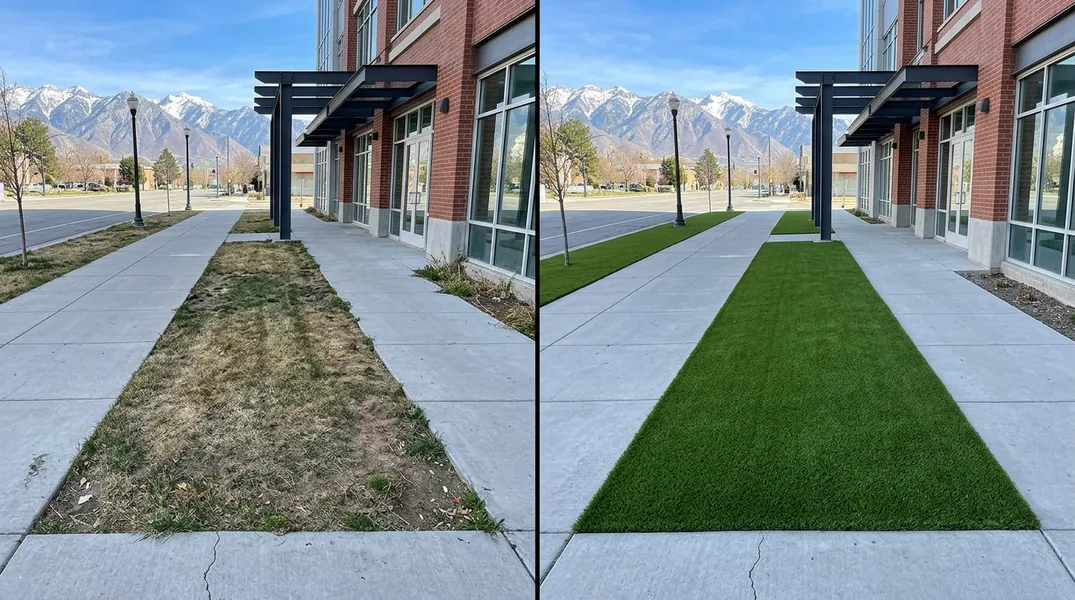
How Hot Does Artificial Grass Actually Get in Salt Lake City?
If you're considering Residential Artificial Grass Installation in Salt Lake City, you've probably heard the concern: does artificial grass get dangerously hot? The short answer is yes, it can get hotter than natural grass, but the numbers might surprise you, and the solutions are straightforward.
In full summer sun, artificial turf in Salt Lake City typically reaches between 140 and 180 degrees Fahrenheit, depending on the turf quality, infill type, and how much direct sunlight it receives throughout the day. Natural grass, by comparison, stays closer to 110 to 120 degrees because it retains moisture and benefits from natural cooling through evapotranspiration. That's a real difference, and it matters if you have children or pets who spend time barefoot on the surface.
However, context matters. Asphalt and concrete in the same conditions often exceed 160 to 190 degrees. Most artificial grass products sold today are engineered to withstand these temperatures without degrading, and modern infill materials have come a long way in addressing the heat concern. The key is understanding what contributes to excessive heating and what you can do about it before installation.
Why Artificial Turf Heats Up More Than Natural Grass
The science behind artificial grass heat is simple: synthetic fibers don't retain water the way living grass does. Natural grass cools itself through a process called transpiration, where moisture evaporates from the plant tissue. Artificial turf has no biological mechanism for this cooling effect. Instead, it absorbs and stores solar radiation, transferring that heat into the infill layer beneath it.
The color of your turf also plays a role. Darker, more realistic-looking grass absorbs more heat than lighter alternatives. Most homeowners choose darker varieties because they look more natural, so heat absorption becomes a trade-off between aesthetics and temperature management. The density of the turf pile matters too. Tightly woven fibers with a higher blade count create more surface area for heat absorption compared to lighter, more open weaves.
Another factor is the infill material itself. Traditional silica sand, which has been the industry standard for decades, conducts and retains heat very effectively. It's inexpensive and functional for drainage and stability, but it does contribute to surface temperature buildup. This is where modern cooling alternatives come into play, and they've become increasingly popular among homeowners in the region who want to mitigate the heat issue.
Cooling Infill Solutions: What Really Works
If heat is your primary concern, the infill you choose during installation makes a measurable difference. Cooling infill materials have been developed specifically to address the temperature problem. The most popular options include thermally reflective infills, recycled rubber infills with cooling properties, and newer cork or coconut-based products that naturally dissipate heat more effectively than sand.
Thermally reflective infills, sometimes called white or light-colored silica alternatives, can reduce surface temperatures by 10 to 20 degrees Fahrenheit compared to traditional dark sand. They work by reflecting more sunlight rather than absorbing it. Cork and coconut-based infills are even more effective at heat dissipation and are also softer underfoot, making them especially popular for Pet Turf & Dog Run Installation applications.
The trade-off is cost. Cooling infills typically run 20 to 40 percent more than traditional silica sand, depending on the material and your specific project scope. For homeowners prioritizing comfort and safety, especially those with young children or pets, the investment often feels worthwhile. During a free estimate, our team can discuss which infill option aligns best with your budget and needs.
Smart Installation Practices to Minimize Heat Buildup
Beyond infill selection, how your artificial grass is installed affects how much heat it accumulates. Proper drainage and base preparation are critical. A well-constructed base with adequate airflow underneath allows heat to dissipate more effectively rather than being trapped and reflected back into the turf. When installation is rushed or corners are cut on the base layer, heat retention increases noticeably.
Shade planning is another practical strategy that many homeowners overlook. If your yard has mature trees or structures that cast afternoon shadows, positioning high-traffic areas in those zones can significantly reduce the barefoot temperature experience. Similarly, strategically placed shade structures like pergolas or umbrellas can be added after installation to create cooler zones for relaxation and play areas.
Watering is also an option, though it requires a different mindset than natural grass maintenance. A light spray of water on artificial turf on extremely hot days can cool it down temporarily, much like misting concrete. It won't damage the turf or infill, and it can make the surface more comfortable for children and pets during peak heat hours. This is especially useful in Millcreek and other areas where summer temperatures regularly exceed 90 degrees.
Is Artificial Grass Safe for Children and Pets in Hot Weather?
The practical question most parents ask is whether their children can safely play on hot artificial grass. The answer depends on the temperature threshold and duration of exposure. At 140 to 160 degrees, the surface is uncomfortable for bare feet but typically not dangerous for short periods. Most children will naturally move to cooler areas or seek shade before sustaining injury. However, if your turf regularly exceeds 170 degrees and you have very young children or elderly family members with sensitive skin, cooling infill becomes a worthwhile investment rather than an optional upgrade.
For pets, the concern is slightly different. Dogs and cats have more sensitive paw pads than human feet, and they can't communicate discomfort as clearly. Extremely hot turf can cause paw pad burns with prolonged contact. If you're installing Pet Turf & Dog Run Installation, we strongly recommend either selecting a cooling infill or ensuring your dog run has adequate shade structures in place. Providing a shaded area and fresh water are essential practices regardless of turf temperature.
The good news is that most artificial grass products installed by professional companies like Salt Lake City Turf Installation are designed with safety in mind. Modern turfs include UV stabilizers to prevent degradation, and quality infills come with the manufacturer's published test data. When you combine proper infill selection with smart yard design and basic maintenance practices, artificial grass can be a safe and practical solution for active families.
Comparing Cost and Long-Term Value of Cooling Options
When evaluating whether to invest in cooling infill or other heat-mitigation strategies, it helps to think beyond the initial installation cost. A standard Residential Artificial Grass Installation with traditional silica sand infill will be the least expensive upfront option. However, cooling infill or cork-based alternatives add durability, comfort, and peace of mind that many homeowners find worth the premium.
The lifespan of artificial grass in Taylorsville and other parts of the region is typically 12 to 20 years depending on quality and maintenance. Over that timespan, the difference between standard and cooling infill becomes a smaller percentage of your total investment. If you plan to stay in your home long-term and use your yard actively, the added comfort and safety justify the expense. For detailed information on how these choices affect your project budget, contact us at (385) 341-8218 or request a free estimate tailored to your specific yard and priorities.
Looking for a professional artificial grass installation company in Salt Lake City? Salt Lake City Turf Installation responds fast for all your artificial grass installation needs.
Get a Free Quote